
Board Edge, Tegular & Microlook Ceiling Tiles Explained
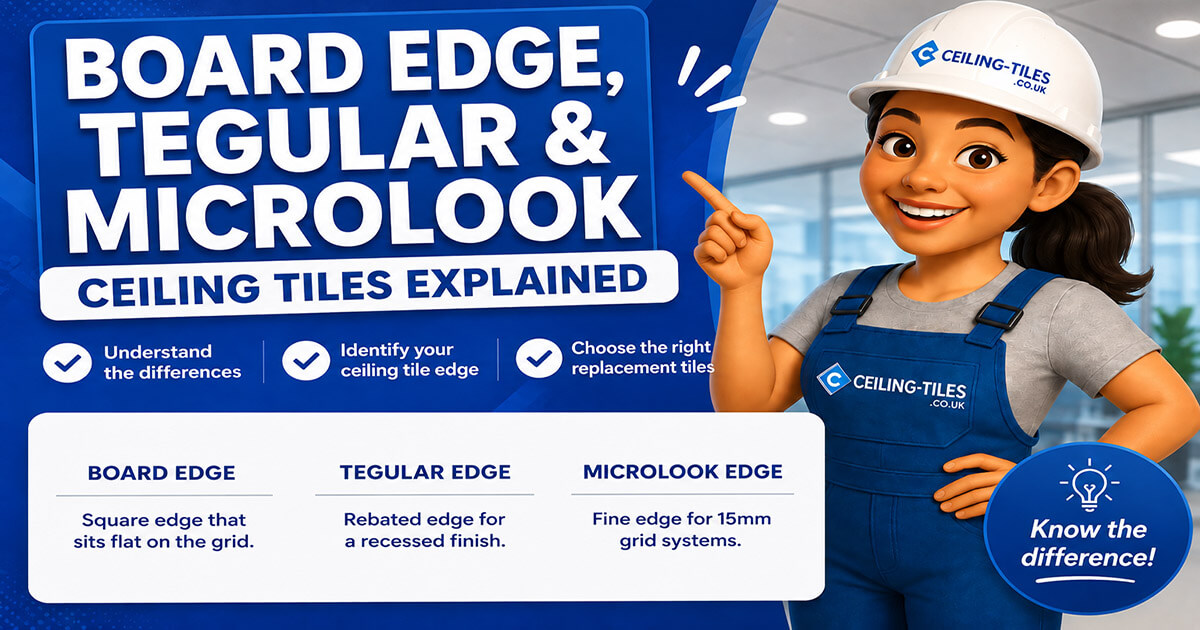
Ceiling Tile Edge Profiles Explained
Choosing the correct ceiling tile edge profile is essential if you want your suspended ceiling tiles to fit properly and look right. This guide explains the difference between Board Edge, Tegular Edge and Microlook ceiling tiles, including where each option works best.
Quick Links
When buying new or replacement ceiling tiles, most people check the tile size first. That matters, but it is not enough. Two tiles can both be 600mm x 600mm and still sit completely differently in the ceiling grid because they have different edge profiles.
The three most common edge profiles are Board Edge, Tegular Edge and Microlook Edge. Understanding the difference will help you avoid ordering the wrong tile and ending up with an uneven ceiling finish.
What Is A Ceiling Tile Edge Profile?
A ceiling tile edge profile is the shape of the tile edge where it meets the suspended ceiling grid. Some tiles sit flat on top of the grid, while others have a rebated edge that allows the tile face to drop slightly below the grid.
This affects both the appearance and compatibility of the tile. The wrong edge profile can make a replacement tile stand out immediately, even if the size, colour and surface pattern are similar.
Important: when ordering replacement ceiling tiles, always check the tile size, grid width and edge profile before buying.
Board Edge Ceiling Tiles
Board Edge Ceiling Tiles, also known as square edge tiles, are the simplest and most common suspended ceiling tile edge type. The edge is cut square, allowing the tile to sit directly on top of the exposed ceiling grid.
This creates a flat, clean and practical finish. Board Edge tiles are popular because they are easy to install, easy to remove and usually straightforward to replace.
Best For
General offices, shops, schools, corridors, storerooms and standard commercial ceilings.
Main Benefit
Simple, practical and usually the easiest option for straightforward replacement projects.
Visual Finish
A clean, flat appearance where the ceiling tile sits level on the visible grid.
Tegular Edge Ceiling Tiles
Tegular Edge Ceiling Tiles have a rebated edge. This means the tile face drops slightly below the grid, creating a recessed shadow effect.
Tegular tiles are often chosen where the ceiling needs to look smarter and more finished than a basic square edge ceiling. They are common in offices, reception areas, meeting rooms, schools and commercial refurbishments.
Best For
Offices, meeting rooms, reception areas, classrooms and commercial interiors.
Main Benefit
Creates a more premium recessed finish compared with standard Board Edge tiles.
Visual Finish
A stepped edge detail that gives the ceiling more depth and definition.
Microlook Edge Ceiling Tiles
Microlook Edge Ceiling Tiles are designed for narrower 15mm ceiling grid systems. They have a smaller, more refined rebated edge than standard Tegular tiles.
Microlook tiles are usually chosen for higher-end interiors where the ceiling grid needs to look more discreet. They are often used in modern offices, showrooms, reception areas and design-led commercial spaces.
Best For
15mm grid systems, premium offices, showrooms and reception spaces.
Main Benefit
Provides the most refined edge detail when matched with the correct narrow grid.
Visual Finish
A sharp, fine recessed finish for a cleaner and more architectural ceiling look.
Board Edge vs Tegular vs Microlook: Quick Comparison
| Feature | Board Edge | Tegular Edge | Microlook Edge |
|---|---|---|---|
| Appearance | Flat and simple | Recessed finish | Fine recessed finish |
| Typical Grid | Usually 24mm grid | Usually 24mm grid | Usually 15mm grid |
| Ease Of Replacement | Very easy | Easy if matched correctly | Requires correct grid match |
| Best Use | General commercial ceilings | Offices and refurbishments | Premium interiors |
| Finish Level | Standard | Smart | Most refined |
How To Identify Your Existing Ceiling Tile Edge
If you are replacing existing ceiling tiles, carefully remove one tile and look closely at the edge. The edge shape usually tells you which profile you need.
- Square edge: usually a Board Edge tile.
- Tile face drops below the grid: usually a Tegular Edge tile.
- Narrow grid with a fine recessed edge: usually a Microlook tile.
- Unsure: measure the tile, measure the grid width and compare the edge profile before ordering.
You should also measure the tile size. Common sizes include 600mm x 600mm ceiling tiles and 1200mm x 600mm ceiling tiles.
Which Edge Profile Is Best For Offices?
For most offices, Board Edge and Tegular Edge tiles are the most common choices. Board Edge tiles are practical and cost-effective, while Tegular Edge tiles create a smarter recessed appearance.
If noise control matters, especially in open-plan offices, meeting rooms or call centres, it is also worth viewing our acoustic ceiling tiles.
Which Edge Profile Is Best For Kitchens, Clinics And Hygiene Areas?
In hygiene-sensitive spaces, the tile material and surface finish are often more important than the edge profile alone. Kitchens, clinics, treatment rooms and food preparation areas usually need ceiling tiles that are easier to clean.
For these areas, start with vinyl ceiling tiles, as they are designed for wipeable, moisture-resistant and hygiene-focused ceiling installations.
Which Edge Profile Is Best For Replacing Damaged Ceiling Tiles?
For replacement projects, the best edge profile is almost always the one already installed. Mixing Board Edge, Tegular Edge and Microlook tiles in the same ceiling can create visible height differences and make the ceiling look patchy.
If the existing tile sits flat on the grid, you will usually need Board Edge. If the tile face drops below the grid, you will likely need Tegular or Microlook depending on the grid width.
For damaged, stained or missing tiles, browse our replacement ceiling tiles and match the size, edge profile and finish as closely as possible.
Common Mistakes When Ordering Ceiling Tiles
- Only measuring the tile size: size matters, but the edge profile must also match.
- Ordering Board Edge instead of Tegular: they may be the same size but will sit differently in the grid.
- Ignoring the grid width: Microlook tiles usually require a 15mm grid system.
- Mixing edge profiles: this can create an uneven and inconsistent ceiling finish.
- Assuming all 600x600 tiles are interchangeable: tiles can differ by edge, thickness, material, acoustic performance and humidity resistance.
Final Advice
If you are installing a new ceiling, choose the edge profile based on the look you want, the grid system being used and the budget available. For a simple and practical finish, choose Board Edge Ceiling Tiles. For a smarter recessed finish, choose Tegular Edge Ceiling Tiles. For a refined finish on a 15mm grid system, choose Microlook Edge Ceiling Tiles.
If you are replacing existing tiles, do not guess. Check the size, grid width and edge detail before placing your order.
Need Help Choosing The Right Edge Profile?
If you are not sure whether you need Board Edge, Tegular Edge or Microlook ceiling tiles, check your existing tile carefully before ordering. The safest approach is to match the tile size, edge profile and ceiling grid width.
Frequently Asked Questions
What is the difference between Board Edge and Tegular Edge ceiling tiles?
Board Edge tiles have a square edge and sit flat on the ceiling grid. Tegular Edge tiles have a rebated edge, allowing the tile face to sit slightly below the grid for a recessed appearance.
Can I replace Tegular tiles with Board Edge tiles?
It is not recommended unless you are replacing the whole ceiling area. Board Edge and Tegular tiles sit differently in the grid, so mixing them can create an uneven finish.
What is a Microlook ceiling tile?
A Microlook ceiling tile has a fine rebated edge and is usually designed for 15mm ceiling grid systems. It creates a sharper and more refined ceiling finish.
How do I know which edge profile I need?
Remove an existing tile and inspect the edge. A square edge is usually Board Edge, a deeper recessed edge is usually Tegular, and a fine recessed edge on a narrow grid is usually Microlook.
Are all 600x600 ceiling tiles the same?
No. Ceiling tiles may share the same size but differ by edge profile, thickness, material, acoustic performance, humidity resistance, fire rating and visual finish.